1. Who we are
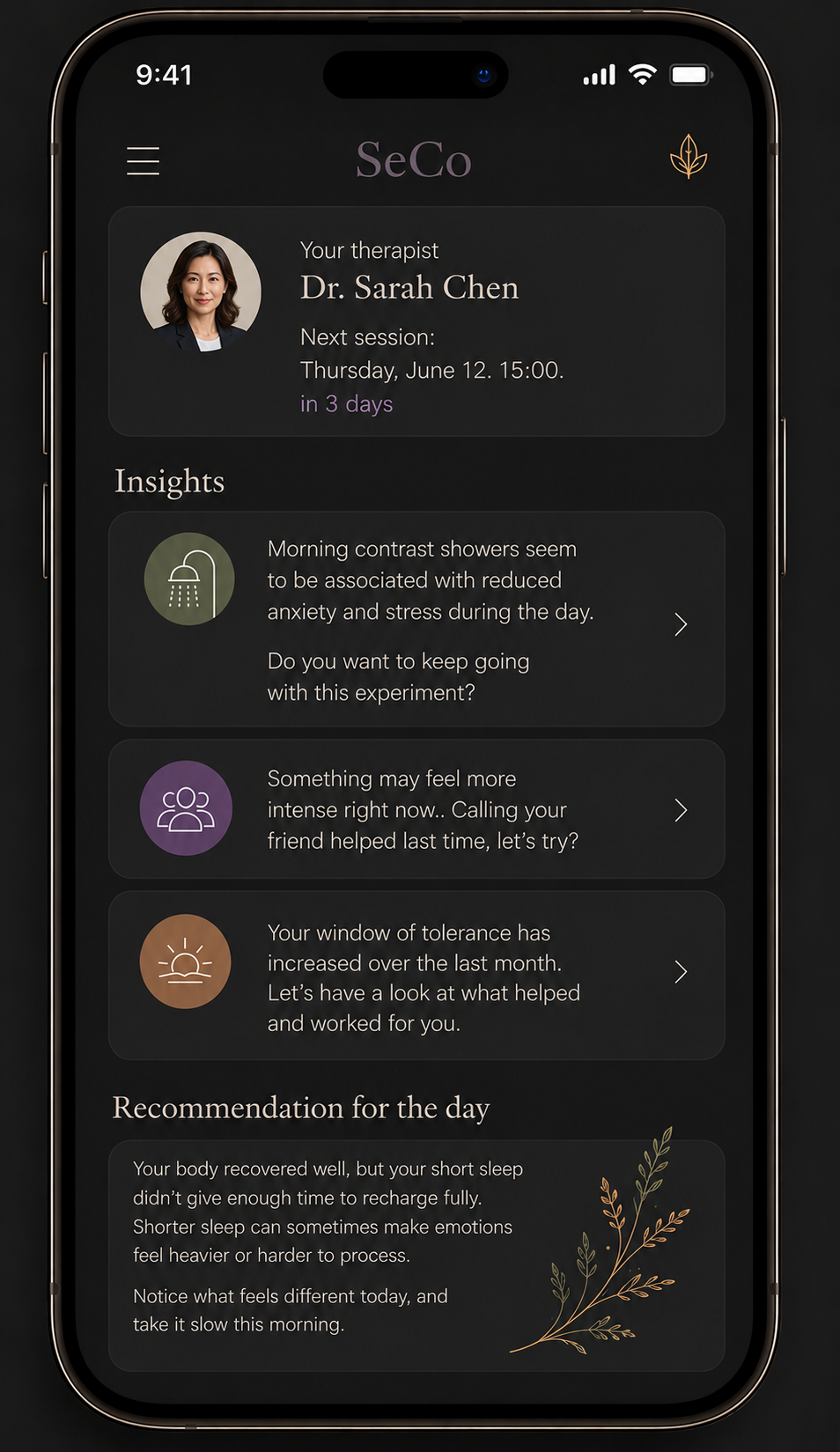
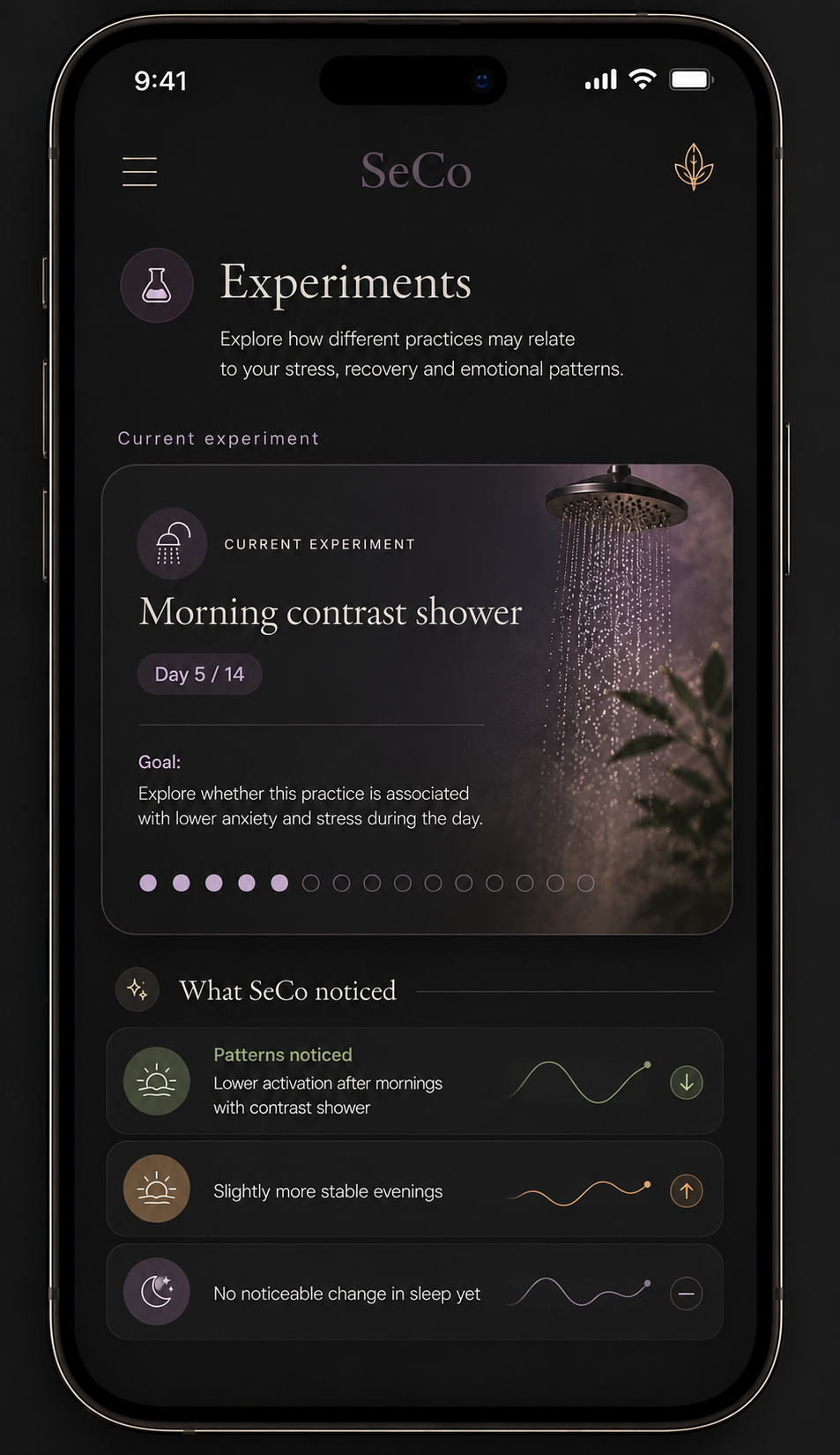
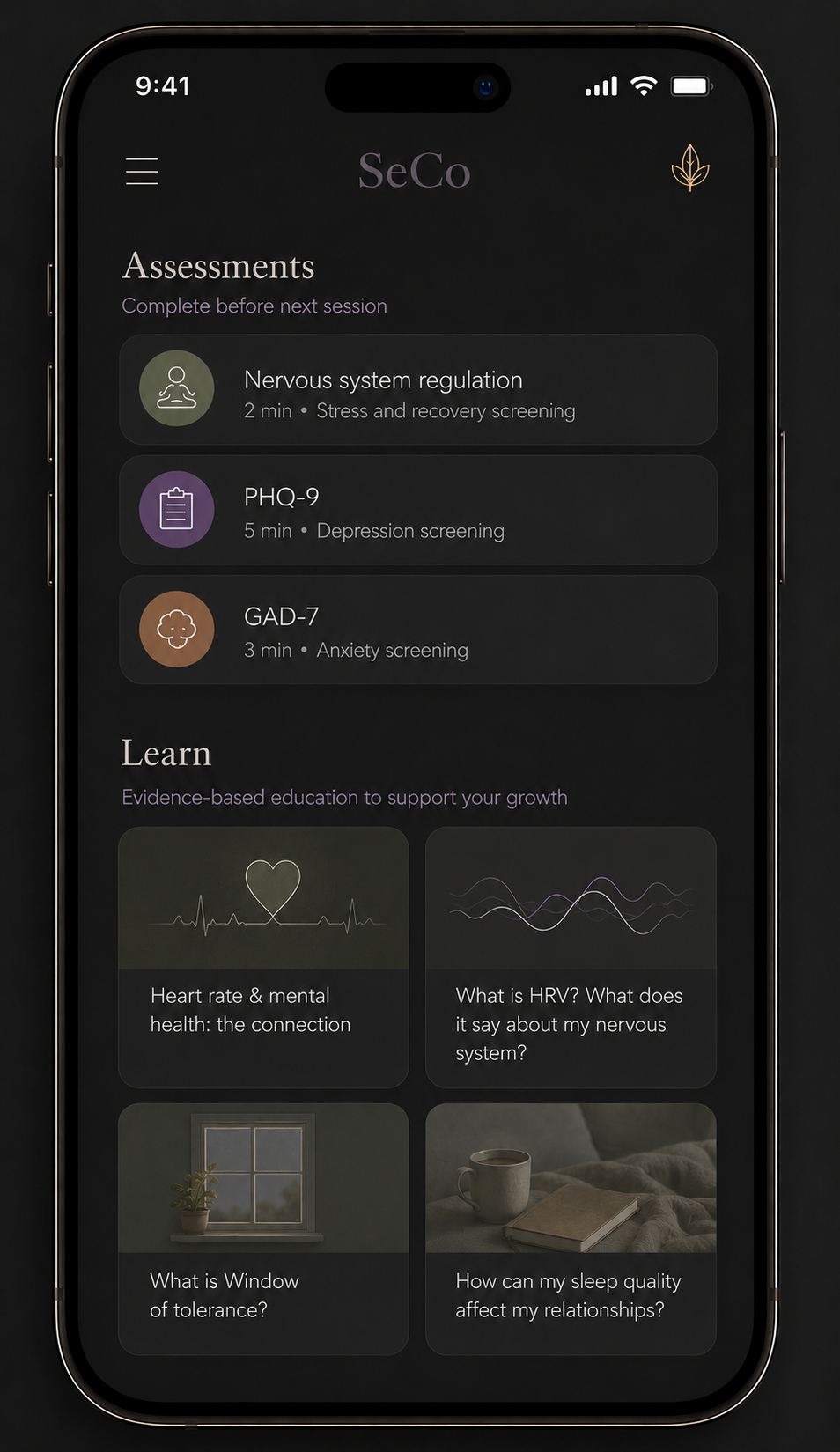
This landing page is operated by Anastasia Yunchits, running an early-stage research project exploring somatic therapy and nervous system metrics (the "Project"). The Project is publicly known as SeCo ("Sensitive & Connected").
If you have any questions about this Privacy Policy or how we handle your data, you can contact us at anastasiayunchits@gmail.com.
2. What data we collect
When you use this site, we may collect:
- Identification and contact details: your name, email address, professional role (e.g. therapist, researcher, client), organisation, and country or time zone if you choose to provide them.
- Information about your interest: whether you want to join research, support SeCo as a founding community member, access tools as a therapist, or join the waitlist as a future user.
- Technical information: basic log data such as IP address, browser type, and device information, collected by our hosting provider for security and performance.
We do not intentionally collect special categories of data (such as detailed health information) through this landing page form. Please do not submit clinical details or sensitive personal information here.
Physiological signals collected by the SeCo wearable device, once available, will be governed by a separate Device Privacy Policy and informed-consent agreement obtained at the time of device onboarding. This Privacy Policy covers the public website only.
3. How we use your data
We process your personal data to:
- Respond to your enquiry and contact you about potential participation in our research or early product tests.
- Send you scheduling links (for example via Calendly) and related information about calls or sessions you book, when you ask us to.
- Send you occasional updates about the Project, such as progress, opportunities to collaborate, or product launch news, if you have asked to receive them.
- Maintain the security and performance of this website.
We will not sell your personal data or share it with third parties for their own independent marketing.
4. Cookies
This website uses a small number of strictly-necessary cookies and a local-storage entry needed for the site to work properly and to remember your cookie consent. We do not currently use tracking, advertising, or third-party analytics cookies.
- Consent preference: we store your cookie choice in your browser's local storage (under the key
seco_cookie_choice) so we don't ask you again on every visit. This stays in your browser; we never read it on our servers.
- Strictly-necessary technical cookies: our hosting provider (Netlify) may set short-lived cookies to keep the site secure and stable.
If we add a privacy-respecting analytics tool (such as Plausible) in the future, we will update this policy and, where required, ask for your consent first.
5. Legal basis for processing
As the Project is operated from Poland, GDPR applies to how we handle personal data. Depending on the context, we rely on:
- Consent – when you actively submit your details to join the research, request to be contacted, or join the waitlist, you consent to us using your data for these specific purposes.
- Legitimate interests – we may process limited technical data (like logs) to keep our website secure and functioning, in a way that does not override your rights and freedoms.
If you join SeCo research as a participant, we will obtain a separate written informed consent at the time of recruitment, in line with the ethical-review standards applicable to the study.
You can withdraw your consent at any time by contacting us or using any unsubscribe link in our emails. This will not affect processing that has already taken place.
6. Where your data is stored and international transfers
The Project is currently operated from Poland, but we may use service providers located in other countries, including the European Union, the United Kingdom, and the United States.
When we transfer personal data internationally, we aim to use providers that implement appropriate safeguards, such as Standard Contractual Clauses or equivalent mechanisms recognised under GDPR or other local laws.
7. Third-party service providers
To operate this Project, we use third-party tools that may process your personal data on our behalf ("processors"), for example:
- Website hosting and form handling (Netlify), which stores form submissions and basic logs.
- Scheduling tools (e.g. Calendly), if and when we send you a link to book a call or session.
If we adopt an email or newsletter platform in the future, we will list it here.
These providers are only allowed to process your data in accordance with our instructions and applicable data protection laws.
The "Share on LinkedIn", "Share by Email" and "Copy Introduction Message" buttons on this site operate entirely within your own browser and the apps you choose to use. SeCo does not receive any information about who you share with.
8. Payment and pledge processing
When you support SeCo through a founding community tier or a future crowdfunding campaign (for example on Kickstarter), payment is processed by a third party (e.g. Kickstarter, Stripe, or a similar provider). We never see or store your full card details. We receive only the basic information needed to fulfil your tier or pledge — typically your name, email address, the tier you selected, and, where physical rewards are involved, a shipping address.
The payment processor will be bound by its own privacy policy and data-processing terms, and any international transfer will be subject to the safeguards described in section 6 above.
9. How long we keep your data
We keep your personal data only for as long as necessary to:
- Communicate with you about the research, collaboration, or early access opportunities you signed up for.
- Maintain a record of who has asked not to be contacted further (so we can respect that request).
In general, we review contact lists and research interest lists at least once per year and delete data that is no longer needed. You can ask us to delete your data sooner (see "Your rights" below).
10. Your rights
Depending on where you live, you may have some or all of the following rights over your personal data:
- The right to access the personal data we hold about you.
- The right to correct inaccurate or incomplete data.
- The right to delete your data ("right to be forgotten") in certain circumstances.
- The right to restrict or object to certain types of processing.
- The right to withdraw consent, where processing is based on consent.
- The right to data portability in some cases.
To exercise any of these rights, please contact us at anastasiayunchits@gmail.com. We may need to verify your identity before fulfilling your request.
If you live in the EEA, UK or another region with data protection laws, you also have the right to lodge a complaint with your local data protection authority. In Poland, this is the President of the Personal Data Protection Office (PUODO).
11. Children
This Project and landing page are not intended for children under 16, and we do not knowingly collect personal data from children via this site. If you believe a child has provided us with personal information, please contact us so we can delete it.
12. Security
We take reasonable technical and organisational measures to protect your personal data, including using reputable service providers, restricting access to data, and using secure transmission where appropriate. No system is perfectly secure, but we aim to reduce risk proportionately to the sensitivity of the data we handle.
13. Changes to this policy
We may update this Privacy Policy from time to time as the Project evolves or as legal requirements change. When we make significant changes, we will update the "Last updated" date above and, where appropriate, notify you via email or through this website.
.png)